
by
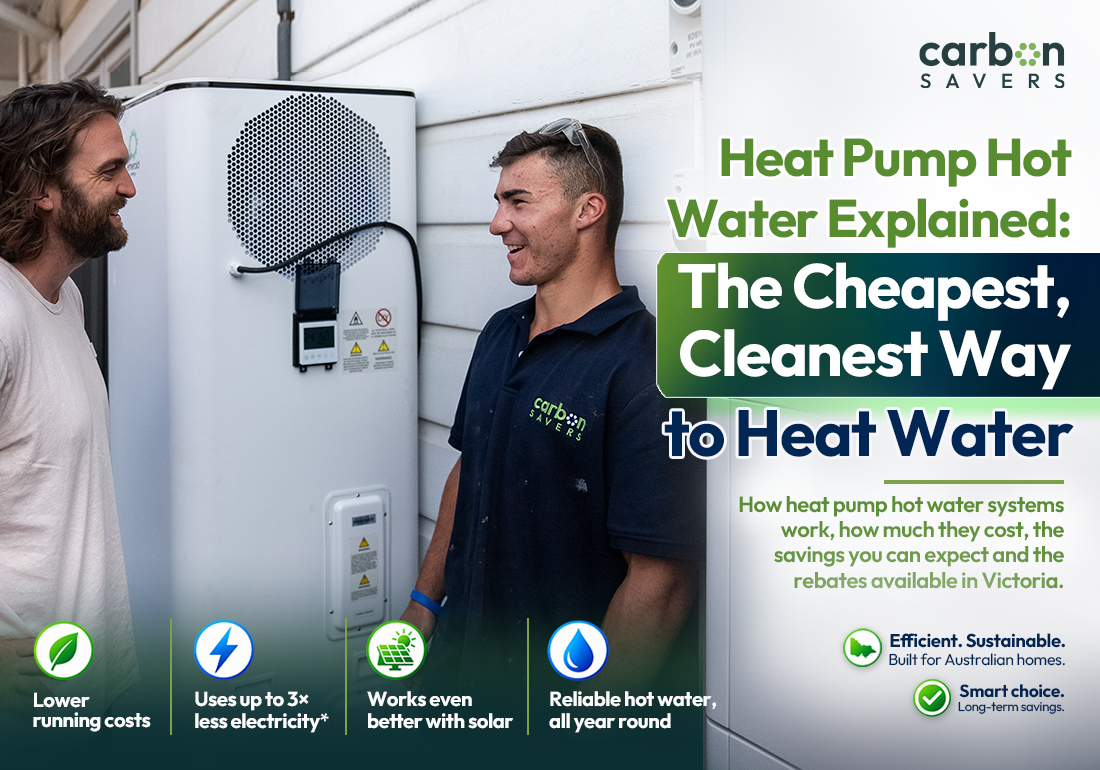
If you are replacing an old hot water system, a heat pump is one of the most energy-efficient options available.
For many Victorian households, it can reduce electricity use, lower running costs, and work even better when paired with rooftop solar.
Unlike traditional electric water heaters, a heat pump doesn’t generate heat directly. Instead, it captures heat from the surrounding air and transfers it into your hot water tank. This simple difference makes it far more efficient than conventional electric storage systems.
One of the biggest advantages of upgrading to a heat pump hot water system in Victoria is the financial support available through government energy-efficiency programs.
Eligible Victorian households may be able to access incentives through the Victorian Energy Upgrades (VEU) program.
Eligible homeowners replacing an existing gas or electric hot water system may be able to access up to $2,380 in government rebates and incentives.
How Much Can You Save with Heat Pump Rebates in Victoria?
The savings don’t necessarily stop at installation. Switching to an efficient heat pump can use up to 75% less electricity than a conventional hot water system, potentially reducing household energy bills by up to $800 per year.
The exact rebate and final installation cost will vary depending on your existing system, the heat pump you choose, your property’s requirements and your eligibility for the relevant schemes.
It’s therefore worth checking your eligibility and getting a tailored quote before making the switch.
A heat pump hot water system uses electricity to move heat rather than create it. It works much like a reverse-cycle air conditioner, but instead of heating or cooling your home, it heats water for showers, washing and everyday household use.
Because most of the heat comes from the surrounding air, heat pumps use much less electricity than conventional electric storage water heaters.
According to the Australian government, modern heat pumps can use around one-third of the electricity required by an electric resistance system, although actual performance varies depending on climate, installation and household usage.1
Several factors are driving the popularity of heat pump hot water systems across Victoria.
For many households, replacing an ageing electric or gas water heater is one of the simplest ways to reduce ongoing energy consumption.
The biggest difference is how the water is heated.
System | How it heats water | Relative energy efficiency |
Electric storage | Electric resistance element | Low |
Gas storage | Gas burner | Moderate |
Instantaneous gas | Gas burner on demand | Moderate |
Heat pump | Transfers heat from the air | High |
Solar hot water | Solar collectors plus booster | High (weather dependent) |
Heat pumps still use electricity, but they typically require much less of it than a standard electric storage system.
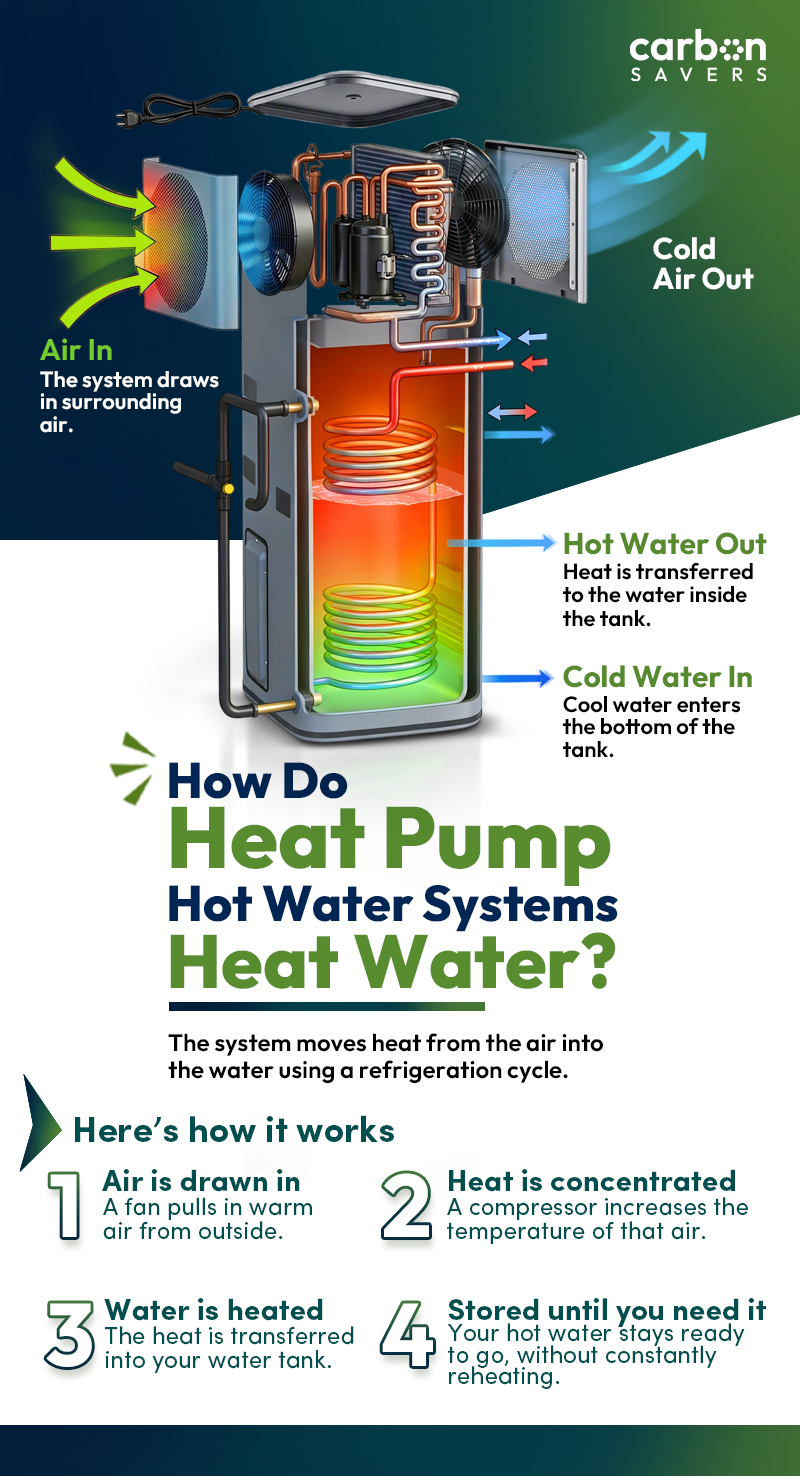
Although the technology sounds complex, the process is surprisingly straightforward.
Instead of generating heat, the system absorbs warmth from the surrounding air and transfers it into the water stored inside the tank.
This process happens continuously until the water reaches the desired temperature.
Every heat pump contains four main components:
These components circulate a refrigerant through a closed loop.
The refrigerant absorbs heat from the outside air, even when the weather feels cool. The compressor then increases its temperature before the condenser transfers that heat into the water stored in the tank.
Because the system is moving heat rather than producing it directly, it requires much less electricity.
Traditional electric storage systems convert electricity directly into heat.
Heat pumps use electricity mainly to operate the compressor and fans while collecting heat from the surrounding air.
This is why they can achieve much higher efficiency than electric resistance systems.
The exact efficiency is commonly described using the Coefficient of Performance (COP). A higher COP means more heat is produced for each unit of electricity consumed. Actual COP varies with air temperature, humidity and the specific model.
Most quality heat pump systems have an expected service life of around 10 to 15 years or more, depending on the product, installation quality and maintenance.
Regular servicing, good airflow around the unit and prompt repairs can all help maximise lifespan.
For many Victorian households, the answer could be yes.
A heat pump can significantly reduce the amount of electricity needed to heat water. Since hot water is one of the largest energy users in many homes, improving its efficiency can noticeably lower household energy bills.
Whether a heat pump is worthwhile depends on your current hot water system, household size, electricity tariff and whether you already have rooftop solar.
Replacing an older electric resistance water heater with a heat pump can substantially reduce electricity consumption.
Households that also use excess daytime solar energy to heat water may achieve even greater savings by increasing self-consumption rather than exporting electricity to the grid.
Actual savings vary depending on usage patterns, electricity prices and system performance.
Heating water with a heat pump generally produces fewer greenhouse gas emissions than using electric resistance heating or many gas systems, particularly as Australia’s electricity grid continues to incorporate more renewable energy.
For homeowners looking to electrify their homes, replacing gas hot water is often one of the first upgrades considered.
A heat pump is often a good fit for:
A heat pump may not always be the best option.
Some households may prefer another technology if:
A qualified installer can assess your home and recommend the most appropriate system.
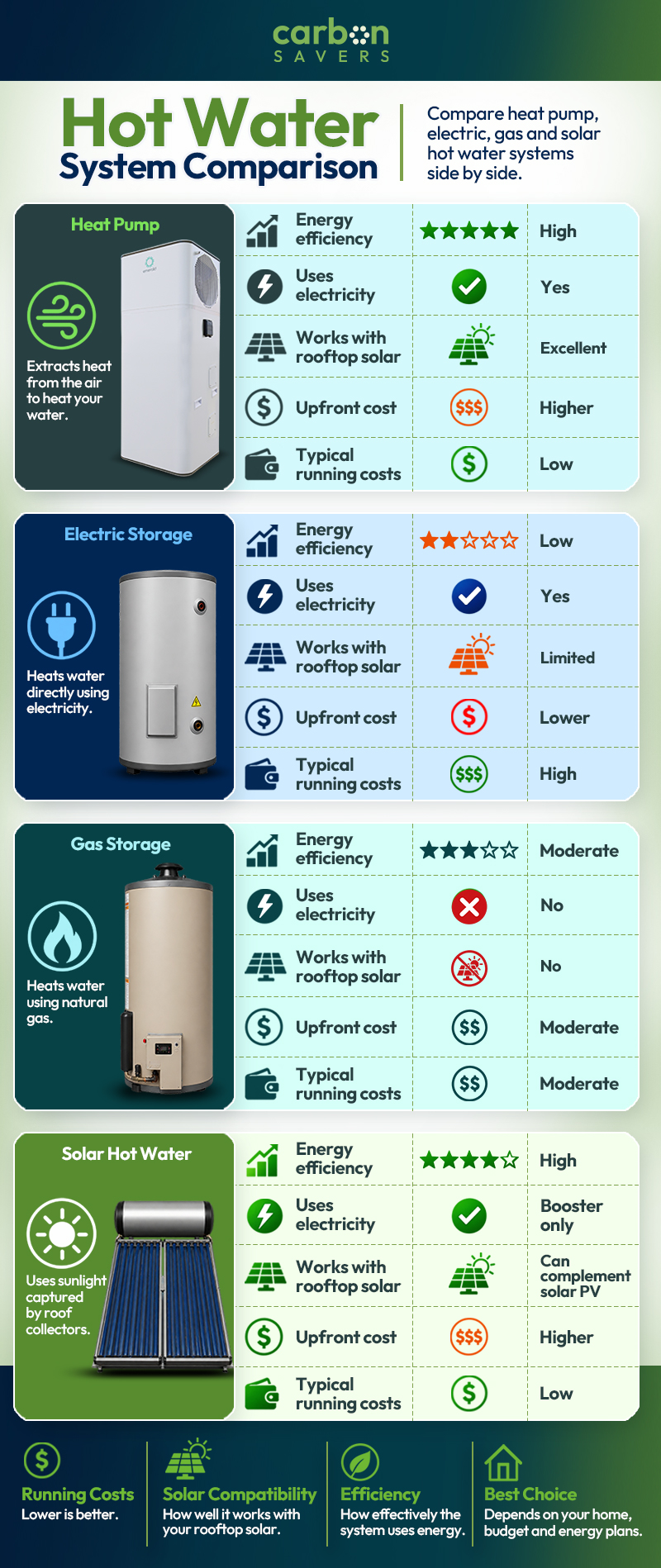
| Feature | Heat Pump | Electric Storage | Gas Storage | Solar Hot Water |
| Energy efficiency | High | Low | Moderate | High |
| Uses electricity | Yes | Yes | No | Booster only |
| Works with rooftop solar | Very well (during daylight hours) | Limited | No | Can complement solar PV |
| Upfront cost | Higher | Lower | Moderate | Higher |
| Typical running costs | Low | High | Moderate | Low |
A heat-pump hot-water system in Victoria typically costs about $2,700-$5,900 supplied and installed.2
The cost of a heat pump hot water system depends on the unit you choose, the complexity of the installation and the rebates you qualify for.
While the upfront investment is usually higher than a standard electric storage system, lower running costs can make it a cost-effective option over time.
A typical installation includes:
More complex installations may require additional plumbing, electrical upgrades or changes to the existing hot water system.
Worked Example
Two households install the same heat pump. One replaces an existing electric storage system with minimal plumbing changes. The other relocates the hot water system and upgrades switchboard wiring. Although the heat pump is identical, the second installation costs more because of the additional labour and materials.
Running costs depend on several factors, including:
Homes with rooftop solar can often reduce operating costs further by heating water during the middle of the day, when solar generation is highest.
Payback periods vary significantly between households. Factors that influence payback include:
Avoid relying on generic payback estimates. A reputable installer should provide a personalised estimate based on your household’s expected energy use.
Victorian homeowners may be eligible for financial incentives that reduce the upfront cost of installing an efficient hot water system. Eligibility requirements, rebate values and approved products can change, so always check the latest information before making a purchase.
Eligible Victorian homeowners may receive a Solar Homes hot water rebate covering 50% of the product purchase price, up to $1,000. Selected locally made heat pumps and solar hot water systems may qualify for a higher rebate of up to $1,400.3
Eligibility depends on factors such as:
The Victorian Energy Upgrades program provides discounts through accredited providers when replacing less efficient hot water systems with eligible energy-efficient alternatives.4
The available discount varies depending on the system and installation.
Some eligible heat pump systems may also receive support through Australia’s Renewable Energy Target via Small-scale Technology Certificates (STCs).
The value of STCs changes over time and is generally reflected in the purchase price offered by participating suppliers.
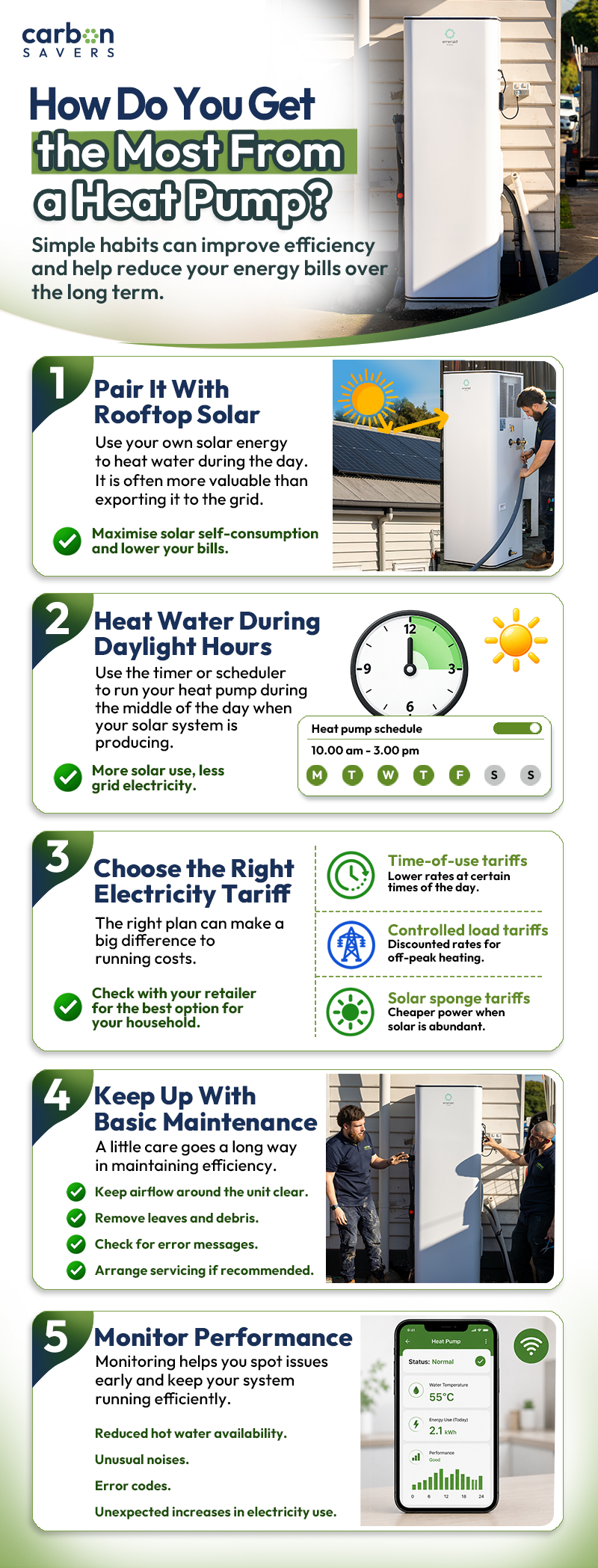
Installing a heat pump is only the first step. A few simple habits can improve efficiency and help reduce your energy bills over the long term.
If your home has solar panels, try to heat water during the day when your system is generating electricity.
Using your own solar energy is often more valuable than exporting it to the grid under current feed-in tariffs.
Many heat pumps include timers that allow you to schedule heating.
Setting the system to operate during the middle of the day can increase solar self-consumption and reduce electricity purchased from the grid.
Your electricity plan can influence running costs.
Depending on your retailer, you may benefit from:
Ask your electricity retailer which option best suits your household.
Heat pumps require relatively little maintenance, but regular care helps maintain efficiency.
Simple tasks include:
Many modern systems include monitoring features that help identify faults early.
Watch for:
A heat pump can be an excellent investment, but the right choice depends on your household’s needs, budget and long-term energy goals.
A qualified installer can assess your home and recommend the most suitable solution.
For many Victorian households, a heat pump hot water system can be a smart long-term upgrade, particularly when replacing an inefficient electric or gas system, combining it with rooftop solar, or taking advantage of available rebates.
The right choice will depend on your household’s hot water usage, property layout, budget and broader electrification goals.
Before choosing a system, it is worth getting personalised advice on product sizing, installation requirements and rebate eligibility. Carbon Savers helps Victorian households explore practical ways to reduce energy costs and move towards a cleaner, more energy-efficient home.
Ready to make the switch? Learn more about heat pump hot water installation and find a solution suited to your household.
Yes. Modern systems are designed to operate in cool Victorian conditions, although efficiency may reduce slightly on very cold days.
An efficient heat pump can use up to 75% less electricity than a conventional hot water system and may reduce household energy bills by up to $800 per year.
Eligible Victorian households may be able to access support through the Solar Victoria hot water rebate, Victorian Energy Upgrades and Small-scale Technology Certificates.
In many cases, yes. A qualified installer can determine whether your home is suitable.
Yes. Pairing a heat pump with rooftop solar is one of the most effective ways to reduce hot water running costs.
Most produce a low level of operating noise, similar to an outdoor air conditioning unit. Noise levels vary between models.
A quality system typically lasts 10 to 15 years or more with proper installation and maintenance.
Yes. They can operate day or night, although daytime operation may reduce electricity costs if you have solar panels.
Most systems require minimal maintenance, but manufacturers may recommend periodic servicing to maintain performance.
The right size depends on your household's hot water usage. Larger families generally require larger storage tanks.
Yes. They generally use less electricity than conventional electric systems and can help reduce household emissions.
For many households, yes. Heat pumps typically use much less electricity, resulting in lower running costs.