
by
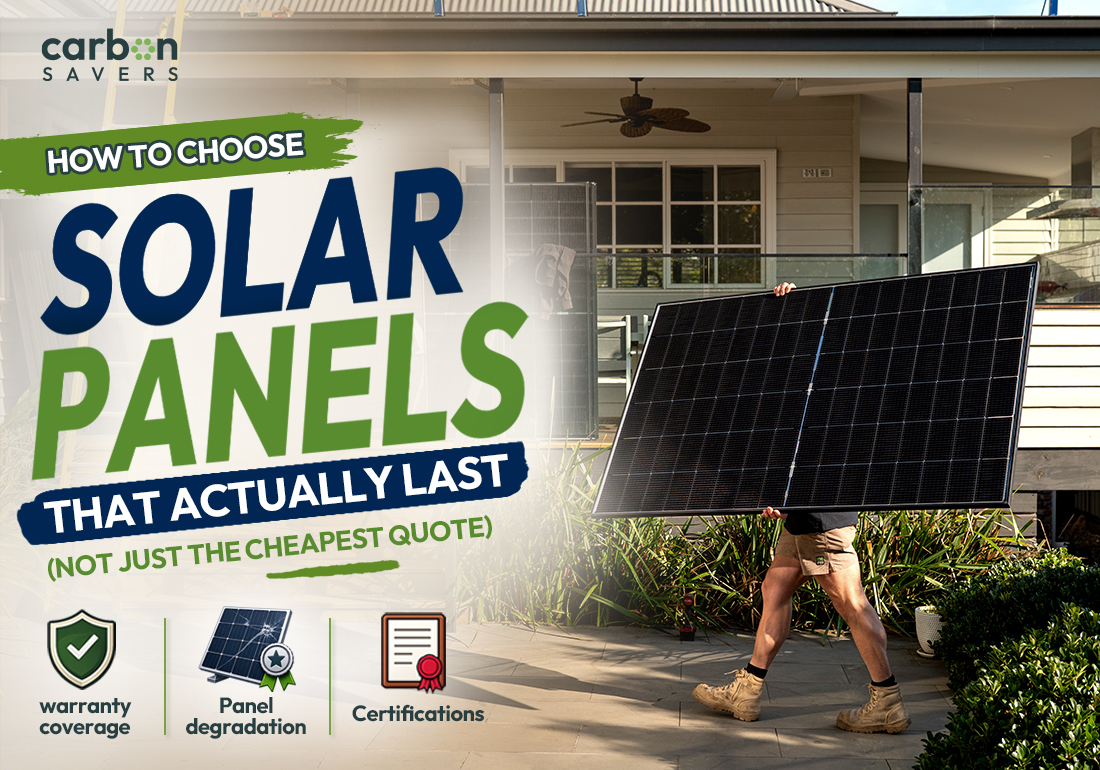
Choosing the cheapest solar quote can save money upfront, but it may cost more over the life of your system if the panels don’t perform as expected or the manufacturer cannot support the warranty.
The best solar panels balance quality, durability and value, helping Australian homeowners generate reliable electricity for decades.
When comparing quotes, it is easy to focus on the total price. However, factors such as warranty coverage, panel degradation, certifications and the manufacturer’s reputation can have a much bigger impact on your long-term return on investment.
Understanding these differences will help you compare quotes with confidence and avoid paying for unnecessary marketing claims.
If you are also deciding on system size, batteries or inverters, those topics are covered in separate guides.
A lower-priced quote often reflects compromises somewhere in the system. While some installers simply operate with lower overheads, cheaper quotes may also include panels with shorter product warranties, lower efficiency, or manufacturers with limited experience in the Australian market.
The goal is not to buy the most expensive panels available. Instead, compare the overall value each quote provides.
A slightly higher upfront investment may deliver stronger performance over 25 years, resulting in greater electricity generation and fewer concerns about warranty support.
The Australian Government recommends reviewing both product warranties and performance warranties rather than choosing a system based on price alone.1
| Feature | Quote A | Quote B |
| System price | $6,300 | $7,100 |
| Product warranty | 15 years | 25 years |
| Performance warranty | 84% after 25 years | 89% after 30 years |
| Panel efficiency | 20.3% | 22.3% |
| Manufacturer history | Limited Australian presence | Established global manufacturer |
Although Quote B costs more initially, it may deliver better long-term value through higher energy production and stronger warranty protection.
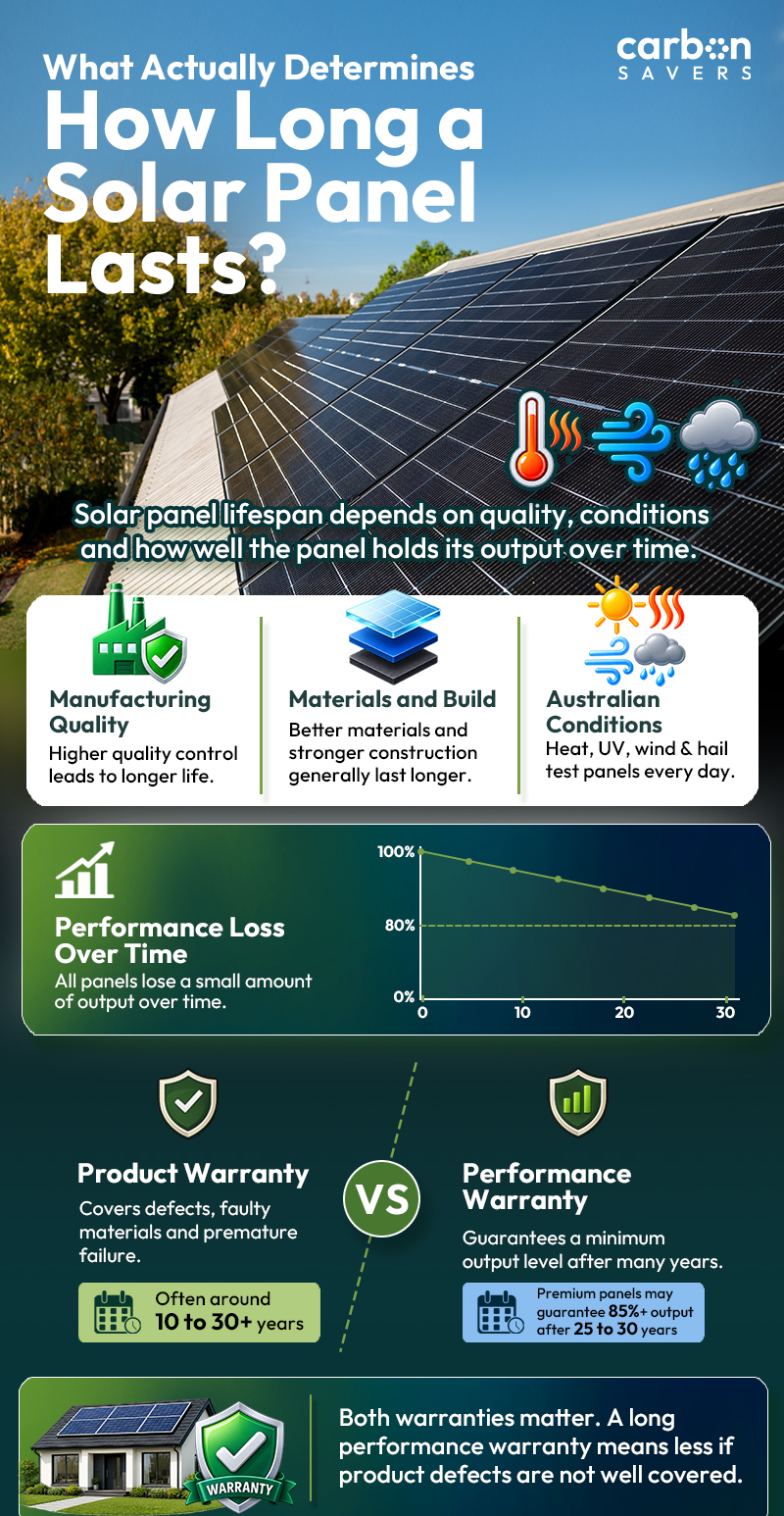
Many people assume that all solar panels last roughly the same amount of time. In reality, their lifespan depends on several factors, including manufacturing quality, materials, environmental conditions and how quickly the panel loses its ability to generate electricity.
High-quality panels are designed to withstand decades of exposure to Australia’s harsh climate, including intense sunlight, heat, wind and hail.
Manufacturers test their products against international standards before they are approved for sale, but not every panel performs equally over time.
These two warranties protect different aspects of your investment.
A product warranty covers manufacturing defects, faulty materials and premature equipment failure. Depending on the manufacturer, this warranty may range from around 10 years to more than 30 years.
A performance warranty guarantees that the panel will continue producing a minimum percentage of its original output after many years of operation. Modern premium panels often guarantee more than 85% of their original capacity after 25 to 30 years.
Both warranties are important. A long performance warranty offers little value if the manufacturer is unable to honour product defects.
Solar panels naturally lose a small amount of generating capacity each year. This gradual reduction is known as degradation.
Panels with lower annual degradation rates retain more of their original performance over time, helping homeowners maximise electricity generation throughout the system’s lifespan.
Manufacturers publish degradation figures in their technical specifications, allowing homeowners to compare products objectively rather than relying on marketing claims.
Not every specification has the same impact on long-term performance. Rather than comparing dozens of technical numbers, focus on the specifications that influence durability and energy production.
Panel efficiency measures how effectively a solar panel converts sunlight into electricity.
Higher efficiency panels generate more electricity from the same roof area, making them particularly useful where roof space is limited. However, efficiency alone should not determine your decision because durability and warranty support are equally important.
Australian summers regularly expose solar panels to high temperatures.
The temperature coefficient indicates how much a panel’s performance decreases as temperatures rise.
Panels with better temperature coefficients generally maintain stronger performance during hot weather.
Solar panels used under Australia’s Small-scale Renewable Energy Scheme must also appear on the Clean Energy Council’s approved product lists administered through the Clean Energy Regulator.2
“Tier 1” is one of the most misunderstood terms in the solar industry. Many homeowners assume it means a panel is independently certified as being the highest quality. In reality, it is not a quality rating.
While many Tier 1 manufacturers produce excellent panels, the classification does not assess durability, efficiency, product quality or long-term performance.
Instead of relying on the Tier 1 label alone, look at the complete picture, including:
A panel from a financially strong manufacturer may provide greater confidence that warranty claims can still be honoured many years into the future, but the Tier 1 label should never replace careful comparison of technical specifications.
Before signing a contract, ask your installer questions that help you understand exactly what you’re buying. A reputable installer should be willing to explain the products they recommend and provide supporting documentation.
✔ What is the exact panel brand and model number?
✔ How long is the product warranty?
✔ What is the performance warranty after 25 or 30 years?
✔ What is the published annual degradation rate?
✔ Does the panel meet IEC 61215 and IEC 61730 standards?
✔ Is the manufacturer well established with Australian warranty support?
✔ Are the panel datasheets available for review?
These questions help shift the conversation away from price alone and towards the long-term value of the investment.
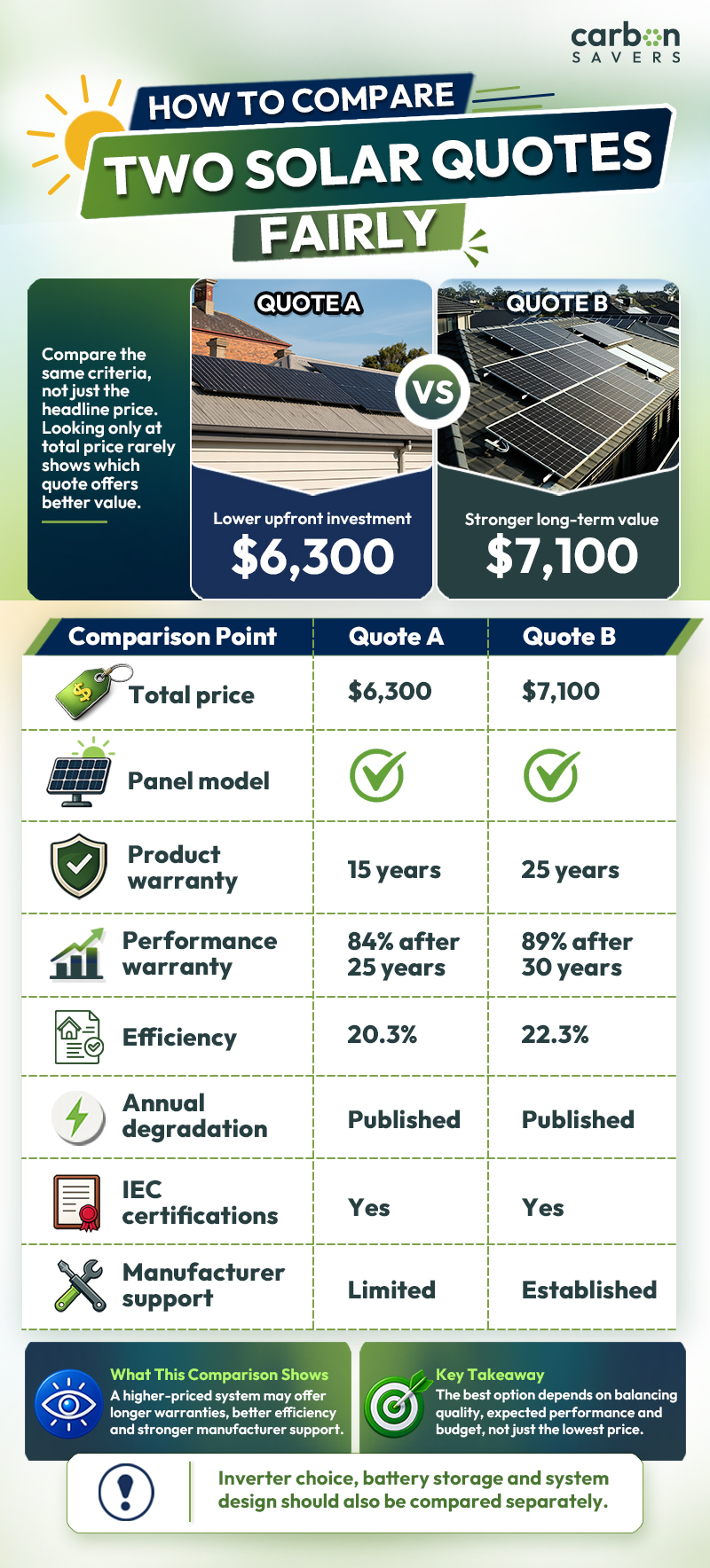
Comparing quotes can be difficult because installers often use different brands, warranty periods and technical specifications.
Looking only at the total system price rarely provides enough information to determine which option offers better value.
Instead, compare each quote using the same criteria.
Comparison Point | Quote A | Quote B |
Total price | $6,300 | $7,100 |
Panel model | ✓ | ✓ |
Product warranty | 15 years | 25 years |
Performance warranty | 84% after 25 years | 89% after 30 years |
Efficiency | 20.3% | 22.3% |
Annual degradation | Published | Published |
IEC certifications | Yes | Yes |
Manufacturer support | Limited | Established |
This type of comparison highlights differences that may not be obvious from the headline price.
Remember that a higher-quality panel does not automatically mean it is the right choice for every home.
The best option depends on balancing quality, expected performance and budget. If you also need help comparing inverter options, battery storage or overall system design, those topics are covered in separate guides.
Choosing solar panels that last means looking beyond the lowest upfront price. Warranty coverage, degradation rates, recognised certifications, manufacturer history and local support all influence how reliably a system may perform over the next two or three decades.
Rather than asking only, “Which quote costs less?”, consider which option offers the strongest long-term value for your home. Comparing the specifications and warranty terms behind each quote can help you avoid decisions based on marketing claims or headline pricing alone.
The right choice will depend on your roof space, budget, expected electricity use and long-term energy goals.
By reviewing each proposal carefully and selecting solar panels that suit those needs, you can invest with greater confidence in a system designed to deliver reliable electricity for many years.
How long should good solar panels last?
Quality solar panels typically last 25 years or more, with their performance gradually declining over time.
Are more expensive solar panels always better?
No. Compare warranties, specifications and manufacturer support instead of price alone.
What is the difference between a product warranty and a performance warranty?
A product warranty covers defects, while a performance warranty guarantees long-term electricity output.
Should I ask for the panel datasheet?
Yes. It shows the panel’s official specifications, warranties and certifications.
Should I compare only the solar panels?
No. Also consider the inverter, installation quality and overall system design.