
by
Choosing the right heat pump hot water system comes down to three key decisions: selecting the right type of system, choosing a reliable brand, and setting it up to maximise energy savings.
Getting these right means you’ll have a system that suits your household, performs efficiently in Victoria’s climate, and helps reduce your ongoing electricity costs.
Because heat pump technology can use around 60–75% less electricity than conventional electric storage systems, it has become a popular choice for homeowners looking to reduce energy use.
But with different system types, brands, sizes, and features on the market, knowing where to start can be challenging for many.
Whether you’re replacing an ageing hot water unit or planning a more energy-efficient home, this guide explains what to consider before choosing a heat pump hot water system.
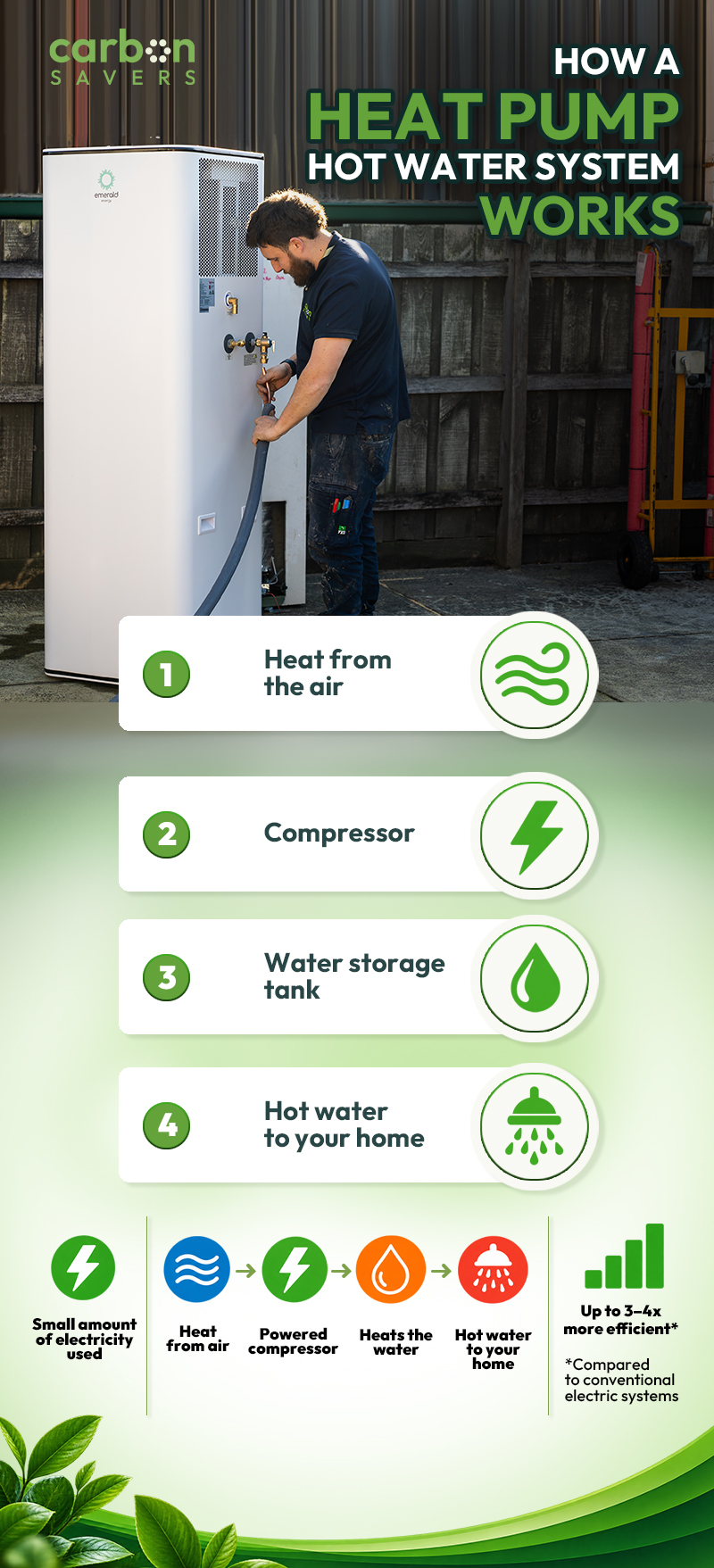
Unlike traditional electric storage systems that generate heat directly, a heat pump extracts warmth from the surrounding air and transfers it into the water stored in the tank.
In simple terms, it operates like a refrigerator in reverse:
This process allows it to deliver the same amount of hot water while using considerably less electricity.
According to the Victorian Government, replacing a conventional electric storage water heater with an efficient heat pump can reduce electricity used for water heating by around 60-75% 1, depending on the system and household usage.
Water heating typically accounts for around 15-30% of household energy use2, making it one of the largest energy consumers in many Victorian homes.
Here’s the difference:
Traditional Electric Storage | Heat Pump Hot Water |
Creates heat using an electric element | Moves heat from the surrounding air |
Higher electricity consumption | Much lower electricity consumption |
Less efficient | Significantly more energy efficient |
Suitable where efficiency isn’t a priority | Ideal for reducing household energy use |
Modern heat pumps are designed to operate across a broad range of outdoor temperatures, making them suitable for most Victorian climates when correctly selected and installed.
If you live in metropolitan Melbourne or regional Victoria, go for a system that’s designed for local conditions and install it in an appropriate location to ensure reliable year-round performance.
When choosing heat pumps, there isn’t a single “best” option for every home. The right choice depends on your household size, available space, local climate and how your family uses hot water.
Most residential air-source heat pump water heaters use one of two configurations: integrated or split, and a range of storage tank sizes.
An integrated or all-in-one heat pump system combines the compressor and storage tank into a single outdoor unit.
They are commonly chosen where installation is straightforward, and there is enough outdoor space.
Split systems separate the compressor from the storage tank, allowing greater flexibility when installation space is limited or where noise or aesthetics are considerations.
The two most common heat pump configurations are integrated (all-in-one) and split systems.
| Feature | Integrated System | Split System |
| Compressor and tank | Combined into one outdoor unit | Compressor and storage tank installed separately |
| Installation flexibility | Simpler where outdoor space is available | Greater flexibility for challenging layouts |
| Pipework | Minimal refrigerant pipework | Additional refrigerant connection between components |
| Appearance | Single outdoor unit | Components can be positioned independently |
| Best for | Straightforward installations | Homes with specific space, noise or layout requirements |
You can seek help from qualified installers like Carbon Savers, who will recommend the configuration that best suits your property’s layout, available space, and installation constraints.
Looking for a more detailed comparison?
For detailed configuration, climate and sizing guidance, see Split vs Integrated, Big vs Small: Heat Pump Options Made Simple
Heat pump hot water systems are available in a range of storage tank capacities, such as 200L, 270L, and 320L.
They are suited to different household sizes and usage patterns.
Therefore, rather than selecting the largest available system, aim for one that matches your expected hot water demand.3
Household Size | Number of People | Recommended tank size |
1-2 bedrooms (Smaller households) | 1-2 people | 150-225 litres |
3 bedrooms (Growing families) | 3-4 people | 225-300 litres |
4 or more bedrooms (Homes with high hot water demand) | 5+ people | More than 300 litres |
This is a general guide only. The right tank size also depends on actual hot water use, shower habits, recovery rate, climate, tariff structure and whether the system will be timed to run with solar.
Before recommending a storage system size, an experienced installer should assess both the installation environment and the equipment itself.
Some factors commonly considered include:
Overall, these practical considerations often have a greater influence on long-term satisfaction than choosing between two similar products.
The Victorian Government encourages homeowners to select hot water systems based on their home’s needs, energy efficiency, and eligibility for available programs rather than price alone.
Solar Victoria offers eligible households a rebate of up to $1,000 for eligible heat pump and solar hot-water products, or up to $1,400 for qualifying locally made products.4
Resources such as the Victorian Energy Upgrades Hot Water Buyer’s Guide5 explain the different technologies and outline factors to consider before purchasing.
Eligibility Note:
As of July 2026, Solar Victoria’s hot water rebate generally requires the applicant to be an owner-occupier, have combined owner taxable income below $150,000, own a property valued under $3 million, replace a system at least three years old, use an authorised retailer and choose an eligible product.6
Even a premium heat pump can underperform if it is poorly installed.
An experienced installer should do five key things:
Don’t forget to ask whom to contact if the system requires servicing in five years. Their answer often tells you more about long-term support than the brochure’s information.
Brand matters, but not simply because of the name on the tank.
A heat pump may eventually require servicing, so it is worth asking who performs warranty repairs and where spare parts are stocked in Australia.
Choosing the right heat pump is about more than selecting a product.
Look Beyond the Brand Name
A quality heat pump hot water system should offer:
Consider Local Service and Support
A heat pump may eventually require servicing, so it is worth asking who performs warranty repairs and where spare parts are stocked in Australia.
Also consider the local service network and how long the manufacturer has operated in Australia.
Hire a Qualified Heat Pump Installer
Installation quality plays the most important role in system performance.
A reputable installer should assess your household’s hot water demand, installation location, electrical requirements and available rebates before recommending a product.
Detailed comparisons between manufacturers, including Emerald and other leading brands, are covered in our dedicated guide: Choosing a Heat Pump Brand You Can Trust (and the Mistakes to Avoid)
Choosing an efficient heat pump is only the first step. Once you select the system, it’s time to consider how it’s configured after installation.
This configuration can significantly influence your running costs.
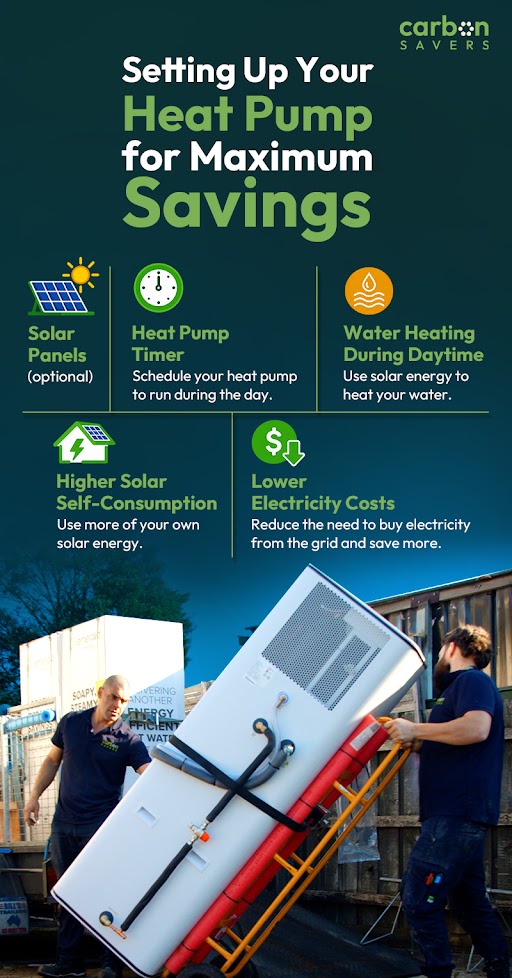
If your household uses time-of-use or controlled-load tariffs, scheduling water heating during lower-cost electricity periods may reduce operating costs.
The best schedule depends on your electricity tariff and daily hot water usage rate.
Running the heat pump during the middle of the day can increase self-consumption by using solar electricity that would otherwise be exported to the grid.
For Victorian homes with rooftop solar, using more of your own solar generation may provide greater financial value than exporting excess electricity at the low feed-in tariff rate.
Every household uses hot water differently.
For example:
Household | Best Operating Strategy |
Couple away during weekdays | Midday heating using solar generation |
Family with children | Ensure sufficient stored hot water before evening demand |
Retired household | Flexible scheduling around daily usage |
A good installer will configure the system around your routine rather than leaving default factory settings unchanged.
Examples include:
These adjustments can help maintain efficient operation over the life of the system.
Routine servicing helps maintain efficiency and reliability over the life of the system.
Follow the manufacturer’s maintenance recommendations and contact your installer if you notice unusual noise or reduced performance.
Most purchasing regrets stem from planning decisions rather than equipment faults.

A lower upfront price may not represent better value if the product has limited support or is unsuitable for the household.
Correct placement, commissioning, and configuration are essential for reliable operation.
The purchase price is only one part of the total cost of ownership. Electricity tariffs, operating schedules, and maintenance all influence long-term value.
Government programs specify eligibility requirements for both products and installers. Confirm eligibility before committing to a purchase.
Every household differs in occupancy, hot water usage, and future plans. The recommended system should reflect those differences rather than follow a one-size-fits-all approach.
Brand comparisons and common buying mistakes are covered in Choosing a Heat Pump Brand You Can Trust (and the Mistakes to Avoid).
A good installer should welcome informed questions. Asking them before signing a contract helps confirm whether the recommended system genuinely suits your home.
Before committing to a heat pump hot water system, confirm that you can answer “yes” to each of the following:
When all is said and done, choosing the right heat pump is about more than selecting a product.
By considering the system type, the manufacturer’s support, and how the unit will be configured for your household, you can make a more informed investment that delivers reliable hot water and lower running costs for years to come.
For more information, speak with Carbon Savers about choosing a heat pump hot water system that suits your home, energy use, available space and savings goals.
Choose a system that matches your household's hot water usage, available space and electricity tariff. An experienced installer can recommend the right option while considering warranty, local servicing and Victorian rebate eligibility.
For many Victorian households, yes. They use significantly less electricity than conventional electric storage systems and may qualify for government rebates, helping reduce both upfront and ongoing costs.
Yes. Modern heat pumps are designed to operate in a wide range of temperatures and perform well across most Victorian climates when correctly selected and professionally installed.
Yes. Scheduling the heat pump to run during the day allows it to use your solar generation, increasing self-consumption and potentially lowering electricity bills.
Compare warranty coverage, local servicing, spare parts availability, installer experience and eligibility for Victorian rebate programs, not just the purchase price or advertised features.
No. Eligibility depends on the product, installer and current government program requirements. Always check the latest information through Solar Victoria or the Victorian Energy Upgrades (VEU) program before purchasing.
A heat pump is often a suitable replacement for an ageing gas system, especially if you're moving towards an all-electric home. The best option depends on your household, energy usage and available incentives.
A lower-priced system may offer reduced warranty coverage or limited local support, so compare the overall ownership experience rather than the upfront cost alone.