
Blog › Is going all-electric worth it
Energy Tips
Is Going All-Electric Worth It? Costs, Savings & Benefits

By Alex Howard
Divisional Head ·
26 Nov 2026 ·
On this page
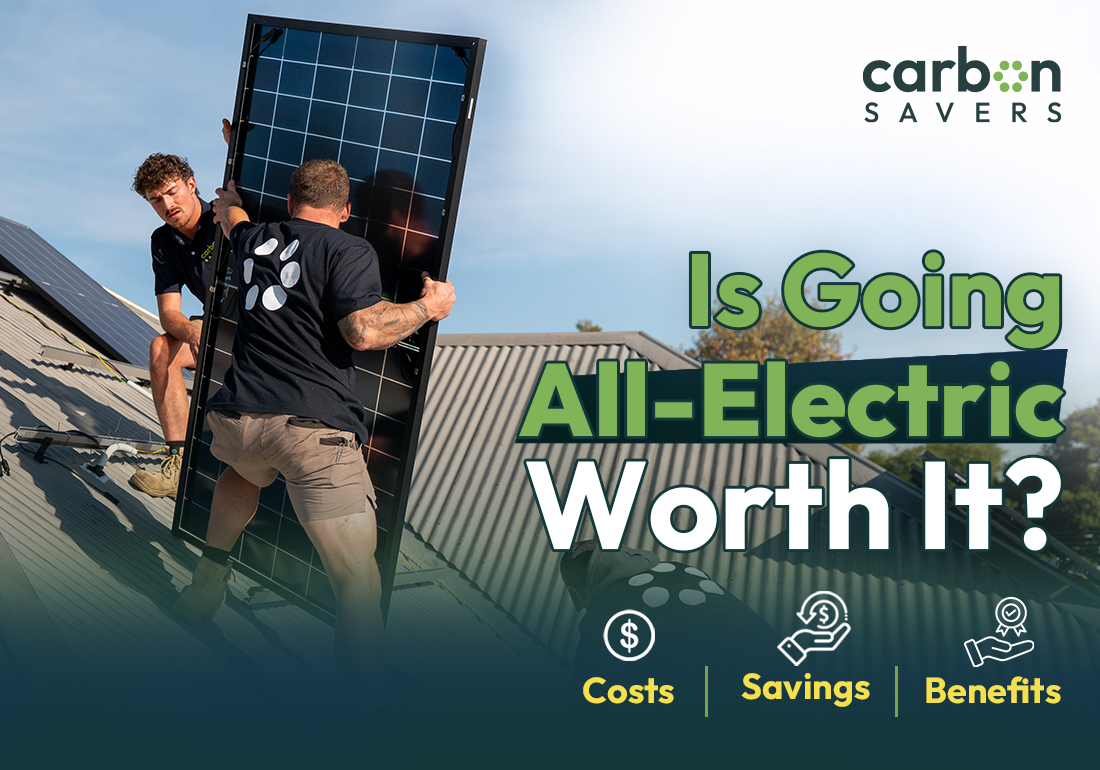
Moving towards an all-electric home could help Victorian households reduce energy costs, improve efficiency and prepare for changing energy needs, particularly those replacing gas heating and hot water with efficient electric alternatives.
Victorian Government estimates suggest existing homes could save around $1,900 annually by switching to electricity, or approximately $2,230 when combined with solar.1
But does that mean you should replace every gas appliance immediately?
Not necessarily.
The upfront investment, the condition of your existing systems, and your electricity usage all affect whether switching makes financial sense.
Fortunately, you don’t have to electrify your entire home overnight.
This guide explains what going all-electric involves, where the savings come from, what costs to consider and how to plan the transition without unnecessary spending.
What Does Going All-Electric Mean for Your Home?
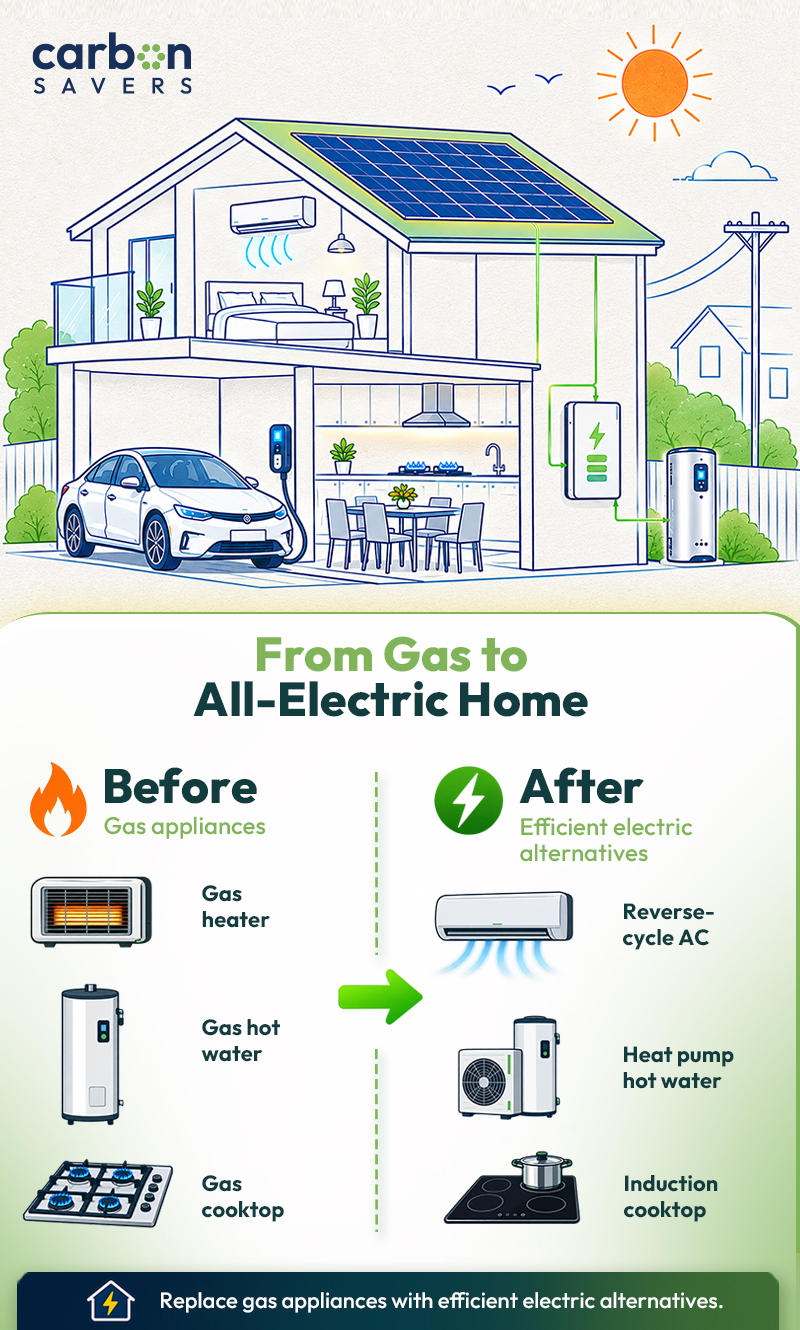
An all-electric home uses electricity instead of gas for everyday activities such as heating, cooling, hot water and cooking.
For Victorian homeowners, this usually involves replacing gas-powered appliances with more efficient electric alternatives.
Here’s what the transition looks like.
| Existing gas appliance | Electric alternative | Main benefit |
|---|---|---|
| Gas ducted or room heating | Reverse-cycle air conditioning | Efficient heating and cooling |
| Gas hot water | Heat pump hot water system | Lower water-heating energy consumption |
| Gas cooktop | Induction cooktop | Efficient cooking without indoor gas combustion |
| Gas supply | Electricity, with optional rooftop solar | Opportunity to eliminate gas supply charges |
The Australian Government identifies heating, hot water and cooking as the three main areas for residential electrification.2
Solar panels aren’t essential for an all-electric home. However, they can help offset electricity purchased from the grid.
Are All-Electric Homes Becoming More Appealing to Buyers?
The shift towards energy-efficient housing isn’t just about reducing household energy bills.
Buyer preferences are also evolving, with more Australians considering how a property uses energy when choosing their next home.
Mirvac’s Property Choices research (April 2025), a survey of more than 2,000 Mirvac leads and purchasers, found half of respondents preferred an all-electric home, while one in five were unsure.
Domain’s Sustainability in Property Report 2025 found that in 2025, 52.2% of houses and 39.1% of units sold nationally had at least one energy-efficient feature mentioned in their property listing.3
These findings highlight growing interest in energy-efficient homes.
While they don’t guarantee a higher resale price for an all-electric property, they suggest efficient appliances, lower running costs and reduced reliance on gas are becoming relevant considerations for homeowners and prospective buyers.
How Much Can Going All-Electric Save in Victoria?
Reducing ongoing energy costs is one of the biggest reasons homeowners consider electrification.
According to Energy Victoria, the following annual savings are possible for existing Victorian homes.
| Household situation | Victorian Government estimated annual savings |
|---|---|
| Existing home switching from gas to efficient electric appliances, without solar | Around $1,900 |
| Existing home switching from gas to efficient electric appliances, with solar | Around $2,230 |
Note: These are modelled estimates, not guaranteed household savings. The figures should not be added together.
Where Do the Actual Savings Come From?
Only three factors can make a huge difference. For example:
1. More efficient appliances
Heat pump hot water systems and reverse-cycle air conditioners move heat rather than generating it primarily through combustion or electric resistance.
This lets them do the same job using less energy, making your home more energy efficient.
2. Reduced reliance on gas
Electric appliances replace gas consumption.
Once every gas appliance has been removed and the gas supply is permanently abolished, households can also avoid ongoing gas supply charges.
3. Using solar electricity
If your home has rooftop solar, suitable electric appliances can use some of the electricity generated during daylight hours, reducing grid purchases.
The amount of savings depends on your previous gas consumption, electricity tariffs, appliance efficiency and household habits.
Which Gas Appliances Can You Replace With Electric Alternatives?
The transition usually involves three main household systems.
Each can be replaced with an electric alternative, depending on your household’s energy needs, existing setup and budget.
1. Replace Gas Heating With Reverse-Cycle Heating and Cooling
Gas heating can be a significant energy expense during Victoria’s colder months.
Modern reverse-cycle systems provide both heating and cooling using electricity.
Rather than burning gas, they transfer heat into or out of your home, making them an efficient alternative to conventional gas heating.4
However, the right system depends on the rooms you use, insulation levels and heating requirements.
Carbon Savers offers single split, multi-head split and ducted reverse-cycle systems to accommodate different household layouts.
2. Replace Gas Hot Water With a Heat Pump
Hot water is another important part of an all-electric home.
According to Solar Victoria, heat pump systems typically use around 60-75% less electricity than conventional electric water heaters. Victorian households replacing gas hot water with a quality heat pump could save approximately $400 annually.
Some heat pumps can also be programmed to operate during solar generation hours.
Explore Carbon Savers’ heat pump hot water systems for suitable Victorian installations.
3. Replace Gas Cooking With Induction
Induction cooking is another step towards removing gas entirely.
Induction cooktops heat compatible cookware directly using electromagnetic energy. The Australian Government identifies them as efficient alternatives to gas and conventional electric hotplates.
Unlike gas burners, induction cooktops don’t produce combustion emissions inside the home.
You may need compatible cookware and electrical work, so check installation requirements before purchasing.
What Does It Cost to Switch to an All-Electric Home?
The biggest financial consideration is usually the upfront cost of replacing equipment.
There isn’t one standard electrification price because every home has different appliances, electrical infrastructure and installation requirements.
Your overall investment may include these 5 things:
- Replacing gas heating, hot water and cooking appliances.
- Installing new electrical circuits or upgrading the switchboard where required.
- Removing or safely decommissioning old equipment.
- Permanently disconnecting the gas supply.
- Installing optional solar panels or battery storage.
Before committing, ask a licensed electrician whether your existing electrical supply can accommodate the proposed appliances.
Not every home requires three-phase power or a complete switchboard replacement.
The important comparison is the additional cost of choosing an efficient electric replacement instead of the alternative you would otherwise install.
For detailed equipment prices, government incentives and payback estimates, see Which Home Energy Upgrades Pay Off Most in Victoria?
Can You Go All-Electric Without Solar Panels?
Yes. An all-electric home can operate entirely on grid electricity.
Solar panels can reduce the amount of electricity you purchase, but they aren’t required to replace gas appliances.
If you’re considering solar later, factor future electricity demand into your system planning.
For example, converting gas heating and hot water to electricity will change your household’s consumption.
A battery is also optional. It may help you use stored solar electricity after sunset, but it isn’t essential for electrification.
How to Plan Your Home's Electrification in Easy Steps
A staged plan helps spread expenditure, avoid rushed decisions and coordinate electrical work.
The following structured plan ensures a seamless and efficient transition
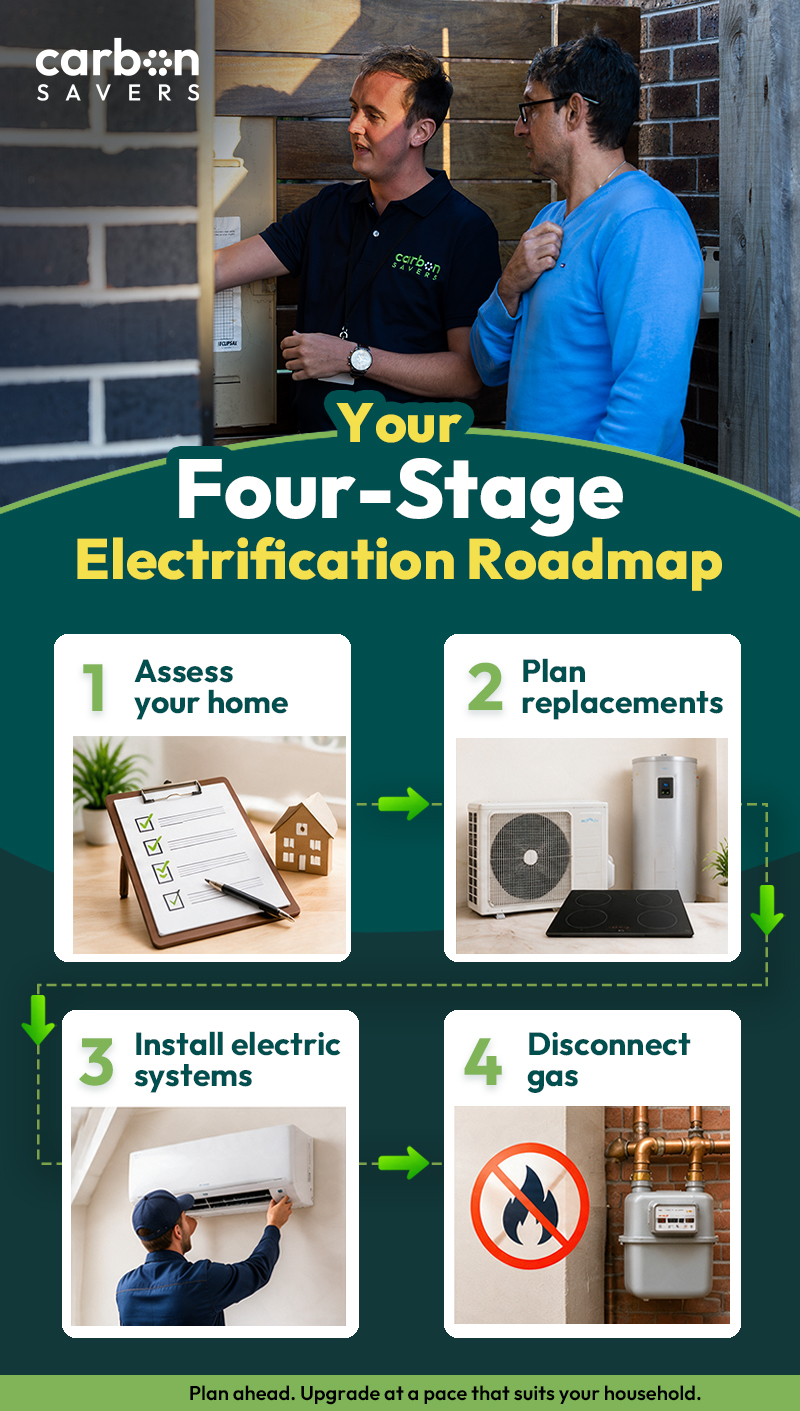
Step 1: Review Your Current Home
List your gas appliances, their age, condition and likely replacement dates.
Review your gas and electricity bills and consider future changes, such as an electric vehicle or additional heating requirements.
This helps establish the total scope of work.
Step 2: Plan Appliance Replacements
Where practical, coordinate upgrades with planned renovations or existing appliance replacement cycles.
If you’re uncertain which investment to prioritise, read Solar, Batteries or Heat Pumps: Which Upgrade Comes First? for guidance based on equipment condition, consumption and budget.
Step 3: Coordinate Electrical Work and Installation
Before replacing appliances, have a licensed professional assess electrical capacity, required circuits and suitable equipment locations.
Consider whether your installations can share electrical preparation work.
Government rebates may reduce eligible upfront costs through the Victorian Energy Upgrades and Solar Homes programs.
Step 4: Disconnect Gas When You're Ready
Once your last gas appliance is removed, arrange for the gas supply to be safely disconnected or abolished through the appropriate provider.
Simply stopping gas usage doesn’t necessarily eliminate ongoing supply charges.
The Government advises that gas disconnection requires qualified professionals.
What Do Victoria's New Gas Rules Mean for Homeowners?
Victoria is introducing additional electrification requirements from 2027.
Two dates matter:
- New homes and most new commercial buildings must generally be all-electric, subject to applicable exceptions and transitional arrangements from 1 January 2027.
- When gas hot water systems in existing residential buildings require replacement, an electric alternative must generally be installed, subject to exemptions from 1 March 2027.5
Importantly, existing homeowners are not required to immediately replace working gas heating systems or gas cooktops.
Existing gas equipment can generally continue operating and be maintained or repaired.
These rules make it worthwhile to plan ahead, particularly if your hot water system is approaching replacement.
What Are the Benefits and Trade-Offs of Going All-Electric?
BENEFITS
- Potentially lower long-term energy bills.
- One less utility connection once gas is eliminated.
- Improved indoor air quality by removing gas combustion.
- Greater opportunities to use rooftop solar.
- Reduced household greenhouse gas emissions.
TRADE-OFFS
- Upfront appliance and installation expenses.
- Possible electrical infrastructure upgrades.
- Continued exposure to electricity tariffs.
- Reliance on grid electricity during outages unless suitable backup is installed.
The Australian Government identifies lower operating costs, reduced emissions and improved indoor air quality among the benefits of household electrification.
Is Going All-Electric Worth It for Your Home?
For many Victorian households, going all-electric offers a practical way to reduce reliance on gas and manage long-term energy expenses.
However, the most sensible approach depends on your current appliances, budget and electrical infrastructure.
Rather than replacing everything immediately, prepare a realistic plan that accounts for essential replacements and future electricity needs.
At Carbon Savers, we help Victorian homeowners explore efficient heating and cooling, heat pump hot water, solar panels and battery storage.
Our team provides free home energy assessments, tailored recommendations, rebate eligibility checks, professional installation and ongoing support.
Ready to explore an all-electric home? Book a free energy assessment to understand your options and plan a practical transition.
References
- www.energy.vic.gov.au/households/save-with-all-electric-home
- www.energy.gov.au/households/electrification
- insight.domain.com.au/research-insights/reports/sustainability-in-property-2025/
- www.energy.gov.au/households/electrification
- www.energy.vic.gov.au/households/save-with-all-electric-home/electric-and-efficiency-standards-for-buildings/existing-residential-buildings
Alex Howard
Alex oversees the operational execution of localised energy solutions like solar & storage to drive business growth and sustainability.
Talk to an expert
Ready to save? Let's make it happen.
Tell us a little about your home and what you’re keen on. We’ll come back with your options, and the rebates you could get. No sales pressure, no cookie-cutter systems, no jargon.
- $0 upfront with our repayment plan
- No call-out fees
- 24-hour response
The right upgrade.
In the right order.
We’ll look at your home, your bills and the rebates you could get, then recommend what to do first.
$0 upfront with our repayment plan. No call-out fees. No obligation.
Frequently asked questions.
More answers in the FAQ hub →
Is it cheaper to run an all-electric home than a gas home?
Often, yes. Efficient electric heating and hot water systems can reduce running costs, particularly when combined with rooftop solar. Actual savings depend on tariffs and consumption.
How much can I save by going all-electric in Victoria?
Energy Victoria estimates savings of around $1,900 annually for existing homes without solar and approximately $2,230 for those with solar. Individual results will vary.
Do I need solar panels to go all-electric?
No. Electric heating, hot water, and cooking appliances can run on grid electricity. Solar is optional but may help lower ongoing energy costs.
Should I replace every gas appliance immediately?
Not necessarily. You can plan replacements around appliance condition, budget and household needs, while taking account of upcoming Victorian regulations.
Will I need to upgrade my switchboard?
Not always. A licensed electrician should assess your electrical capacity and determine whether additional circuits, switchboard work or supply upgrades are necessary.
Can I completely remove my gas bill?
Yes, once all gas appliances are removed and the gas connection is properly abolished, ongoing gas supply charges can cease. Confirm the process and applicable fees with your provider.
Are government rebates available for electrification?
Eligible Victorian households may receive discounts for efficient heating, hot water and solar installations. Incentives depend on the product, property and program requirements.
Is going all-electric environmentally better?
Generally, yes. Efficient electric appliances reduce direct household fossil fuel use, and emissions can fall further as electricity generation becomes cleaner.
Keep reading
Alex Howard
Divisional Head
26 Nov 2026
Alex Howard
Divisional Head
26 Nov 2026

David Bonaddio
25 Nov 2026
